


Moving to Dubai offers exceptional quality of life, record security and zero income tax, But it requires rigorous financial planning. Visit cost of living is marked by rising rents and high private tuition fees. A family of four will need to budget around AED 40,000 to 45,000 per month to live comfortably in this dynamic city.
Summary:
You're no doubt already imagining your new life under the sun, but uncertainty about the real costs and administrative procedures is still holding back your enthusiasm. This article details everything you need to know to live in Dubai with peace of mind, by deciphering school budgets, visa options and the specifics of the local property market. Thanks to this practical guide, you'll be able to turn your doubts into questions. a perfectly managed and secure expatriation project for your family. Whether you're planning to return to France in the long term or settle here for the long haul, this destination remains a great choice for all expatriates.
Why live in Dubai: quality of life, advantages and day-to-day realities
After weighing up the pros and cons, moving to the Emirates often becomes a matter of course for those seeking comfort and security. Every year, this city in the Arab world attracts a growing community of expatriates looking for a unique experience.
A secure, modern living environment in a global city
The sense of security here is exceptional. The crime rate is one of the lowest in the world, and you can leave your bag on a table without any fear. This is a strong argument for families. The police keep a watchful eye with absolute but total discretion.
The infrastructure is strikingly modern. The metro, automated and impeccably clean, is impressive. The roads are perfectly maintained. Everything has been designed to formidable day-to-day effectiveness, from public services to leisure areas.
The tax advantage remains a massive savings lever and an undeniable financial asset. There are no no income tax for residents. Your gross salary becomes your net salary. To make a success of your project, consult this Expatriation Guide Dubai Complete.
Climate and seasonal constraints in Dubai
Summer calls for intense and sometimes extreme heat. The thermometer regularly passes the forty-degree mark. The stagnant humidity makes the outside air heavy during this period, limiting outdoor tourist activities.
The organisation of life then shifts inwards. Every building is equipped with efficient, ubiquitous air conditioning. The shopping centres are transformed into real places to stroll and shop.
And yet.., winter turns out to be absolutely perfect. Temperatures are becoming mild and very pleasant. So you can make the most of the beaches and terraces. It's the perfect time to find out when to go to Dubai, Whether for tourism or to prepare your new home.
Benefits
✓ Zero income tax
✓ Record safety (Top 10 worldwide)
✓ Ultra-modern infrastructure
Disadvantages
✗ Extreme heat in summer (+40°C)
✗ High humidity
✗ Mainly indoor living in summer
The cultural mix and social rules in Dubai.
Dubai is asserting itself as a unique global crossroads. More than two hundred different nationalities live together every day in this cosmopolitan city. English has become the language of communication, making it easier to welcome newcomers.
Respect for local customs and Emirati culture remains essential. Proper dress is expected in public areas. Alcohol may only be consumed in licensed establishments such as hotel bars and restaurants.
Living in Dubai requires real mutual tolerance and adaptation to local lifestyles. Expatriates are quick to adopt social courtesies. For those planning to Living as a couple in Dubai, However, you should be aware that a marriage certificate may be required for certain procedures. The adaptation is fluid.
Obtaining a visa to live in Dubai: guide to administrative procedures
Once the life project has been validated, the administrative side has to be tackled in order to regularise your residence status. The different types of visa each offer advantages depending on your position in the labour market.
Employer-sponsored work visa (most common)
Most residents have a sponsor. This is often the company that recruits you on the Dubai job market. It manages all your initial administrative procedures for finding a job in Dubai including official correspondence with the authorities.
This residence visa for Dubai allows you to sponsor your family. You then become the guarantor for your family. The conditions often depend on your monthly salary and your employment contract. It's a highly structured system with working hours governed by law.
Its validity is linked to your contract. If you leave the job, the visa is cancelled. You then need to find a new sponsor quickly to remain in good standing. In the event of a dispute, you can appeal to the Ministry of Labour.
The Golden Visa 10 years: a long-term visa for investors and talent
This long-term visa is the grail for expatriates. It offers a ten-year stability. People wishing to investing in property in Dubai have easy access. Recognised talent in their professional category is also welcome.
There are many tangible benefits. You sponsor your family with no age limit. No permanent physical presence is required here to keep the title valid. This is the ideal place to develop a business in Dubai.
Applying for a visa is simple and straightforward. The official portal processes applications quickly. Allow around a month for obtain the precious sesame after validation of the criteria. The package also includes access to a wide range of online government services.
The 5-year Green Visa: freelancers and self-employed people
The Green Visa is aimed at qualified self-employed people. It requires no direct employer sponsorship. It gives you total freedom to becoming a freelancer in Dubai and work alone, a perfect option for setting up your own business.
Proof of a higher diploma is required. A minimum income is also required each month. Freelancers must obtain a specific permit. This is a a highly flexible option for experts who want to take advantage of Dubai's dynamic economy.
In the event of a break-up, the long grace period. You have six months to bounce back. Renewal is a simplified procedure for current residents.
Retirement Visa: for those aged 55 and over
Dubai is now attracting working retirees. This specific visa lasts for five full years. It is renewable under certain strict financial conditions set by the local authorities.
You need to own a property. Solid savings or a pension will suffice. French retirees appreciate the’no taxes. The quality of healthcare is also a major asset of this destination.
The French-speaking community here is very dynamic. It's easy to get involved in local clubs. It's a retirement in the sun guaranteed for eligible profiles, an adventure to be experienced to the full.
Emirates ID: the essential card for doing everything in Dubai
This biometric card is your local identity. Without it, you can't do anything. It is compulsory for all official residents wishing obtain Emirates ID in Dubai.
You use it to open an account. You'll need it for electricity. Even your mobile phone subscription depends on it. It is the key to your life in Dubai in the Emirates.
The process includes a medical test. Your fingerprints are recorded by the authorities. The card arrives by post quickly after final validation of the application.
Accommodation in Dubai: Dubai districts, type of accommodation and community
With your papers in order, the search for the ideal home can finally begin. Your choice of accommodation and neighbourhood will depend on your lifestyle and budget.
The best districts by profile: solo, couple, family with children
Families love areas like Jumeirah. There are plenty of large, quiet villas in green surroundings. Schools are often located nearby. It's a very serene environment, ideal for children and even for a pet.
Singles prefer the dynamic Marina. The towers offer incredible views. Everything is accessible on foot, by car or by public transport. It's a a strategic choice for an intense Dubai experience.
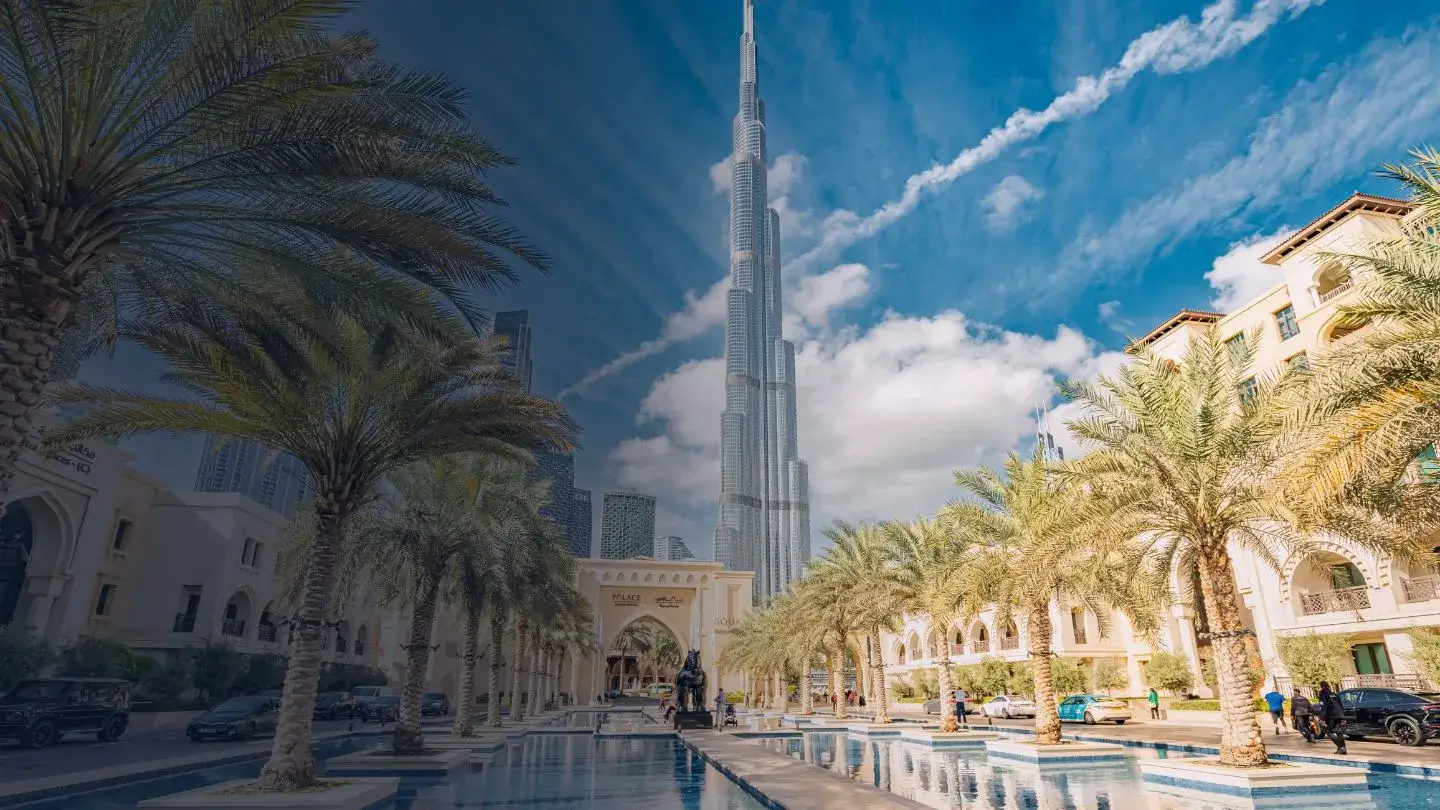
Downtown is perfect for active couples. You live at the foot of the Burj Khalifa. Luxury is present in every corner of this world city. You could even consider’buying a flat in Dubai to ensure the long-term future of your installation.
The rental process and the Ejari rental contract
Rent is usually paid by cheque. One to four cheques are given each year. This is a very surprising local practice. So make sure you have a solid cash flow.
Ejari registration is a crucial step. It Legally formalise your rental contract. Without it, your rights are not protected. It provides security for the tenant.
You should also allow for estate agency fees. A security deposit is also compulsory. These initial costs are sometimes quite high. They are added to the amount of the first cheque.
Monthly charges, DEWA and internet services
DEWA manages water and electricity. Bills are sent by email every month. Overall, the service is very reliable. Payment is made easily via the dedicated application.
Air conditioning can be very expensive. Some buildings include this cost in the rent. Check this point carefully before signing. Surprises can be unpleasant in summer.
Budget tip
Look for flats «chiller-free» where the owner covers the cost of air conditioning to reduce your bills DEWA during the summer.
Internet and telephone are budgets not to be neglected. Offers are often grouped by operator. Rates are higher than in France. Expect to pay between 300 and 700 AED per month for internet and mobile.
What is the monthly budget for an expatriate family in Dubai?
Living in a villa is one thing. managing day-to-day expenses is another way of making a success of your plans to live in Dubai.
Tuition fees, schools and the education system
Schooling is the biggest budget item. French lycées are highly regarded here. Prices increase according to school level.
Registration fees must be added. School transport is often additional. Uniforms are compulsory at all schools. The annual budget can quickly escalate for moving to Dubai with your family peacefully.
Extra-curricular and leisure activities are very varied. Sport and art are expensive. Allow a margin for these leisure activities, particularly during the school holidays.
Health, healthcare and compulsory medical insurance
Healthcare is entirely private in Dubai. All residents must have valid insurance. Employers generally cover the employee alone.
Consultations are fast and efficient. The clinics are modern and well-equipped. Medical expenses often have to be paid in advance. Visit reimbursements depend on your chosen contract.
Estimated monthly budget (Family of 4) :
| Item of expenditure | Estimated budget (AED) | Frequency | Note |
|---|---|---|---|
| Rent | 15 000 | Monthly | 3-bedroom flat |
| School | 8 500 | Monthly | Average for 2 children |
| Power supply | 5 000 | Monthly | Shopping and imported products |
| Transport | 3 000 | Monthly | Car, petrol and parking |
| Health | 2 000 | Monthly | Full insurance |
| Leisure | 4 000 | Monthly | Going out and restaurants |
Take out comprehensive optical cover. Dental care is also fairly expensive. A good mutual is revealed really indispensable to make the most of life in Dubai.
Public transport, cars and the cost of living
The car is almost indispensable in Dubai. Petrol is still very affordable in the Emirates. There are plenty of well-designed car parks in every part of the city.
Shopping takes some getting used to. Imported products are very expensive. Favour local markets to save money. Supermarkets offer a huge choice of products to help you control your food costs. cost of living in Dubai.
Dining out is a regular occurrence. Dubai is a world capital of gastronomy. Visit leisure budget can vary enormously depending on your ideal salary or frequent use of Dubai Metro and public transport.
Moving to and living in Dubai offers an exceptional quality of life and zero tax, provided you plan ahead for housing and schooling costs. Prepare your budget and documents now to obtain your residence visa. Your new life under the Emirati sun awaits your decision.
FAQ
What monthly budget should you plan for to live comfortably in Dubai?
Le The cost of living depends on your family situation. For a single person, you need to budget between AED 15,000 and AED 18,000 a month. For a family of four, a budget of AED 40,000 to 45,000 (around €10,000) is needed to cover housing, schools and health.
Good to know: These estimates do not include luxury, but they do guarantee a high standard of living with all the modern facilities you'll need on a daily basis.
What are the different residence visa options available?
The classic work visa, sponsored by your employer, is still the most common. However, the Golden Visa now offers 10-year stability for property investors (minimum purchase of AED 2 million) and skilled talent. Self-employed people can opt for the 5-year Green Visa or the virtual work visa.
Each option has its own specific criteria, particularly in terms of minimum income and qualifications. The choice will depend on your professional status and your willingness to self-sponsor.
How does the process of renting a property work?
Renting in Dubai is highly structured. Rent is generally paid in annual cheques (from 1 to 4 cheques). You must register your contract via the Ejari system to protect your legal rights. You should also bring a deposit of 5 % and the agency fees with you when you sign.
To finalise your application, you will need your passport, your residence visa and your Emirates ID. Neighbourhoods such as the Marina and Jumeirah are particularly popular, depending on whether you are alone or with your family.
What monthly budget should you plan for to live comfortably in Dubai?
Education is a major budget item, as the system is entirely private. For a French lycée like Georges Pompidou, annual fees are approximately AED 50,700. For the youngest children, a year in a crèche costs between AED 33,000 and AED 40,000.
Don't forget to factor in ancillary costs: enrolments, uniforms, textbooks and school transport. These costs must be integrated into your salary negotiations from the outset.
Is it nice to live in Dubai?
Yes, living in Dubai is a very pleasant experience for the majority of expatriates. The city offers an exceptional quality of life thanks to its security, perfect winter climate, modern infrastructure and international community. There are plenty of leisure activities to choose from, from beaches and shopping centres to desert tourism.
The main challenge remains the summer heat, but the omnipresent air conditioning and the various indoor activities more than make up for it. This is a in the world for those looking for a dynamic and safe living environment.
What are the requirements for living in Dubai?
To live in Dubai, you need to obtain a residence visa. The main options are the employer-sponsored work visa, the 10-year Golden Visa for investors, the 5-year Green Visa for freelancers and the Retirement Visa for the over-55s.
Each type of visa requires specific conditions: an employment contract, a minimum property investment or proof of income. Once you have obtained your visa, you will receive your Emirates ID and will then be able to sign a rental contract, open a bank account and subscribe to essential services such as DEWA and internet.