


Are you wondering why you are still sacrificing a colossal proportion of your income when you can legally optimise your tax situation right now? Setting up as a freelancer in Dubai is the ultimate strategy in 2026 for entrepreneurs wishing to secure their assets while benefiting from a booming business ecosystem. This guide gives you the keys to obtaining your residence visa, benefiting from total tax exemption and avoiding the administrative pitfalls that often hold back ill-prepared expatriates.
Why Dubai is the ideal playground for freelancers in 2026
Forget the tourist clichés. If you're reading this, it's because you're looking for a real return, not just sunshine. Dubai is no longer an exotic option, it has become a mathematical necessity for the pragmatic entrepreneur who refuses to see his margins disappear elsewhere.
The tax advantage: zero income tax, an immediate net gain
Imagine keeping every single invoice you receive. Here, the total absence of personal income tax is a concrete reality: 100 % of your winnings stay in your pocket, This is in stark contrast to the tax burden in Europe.
But don't be naive: this paradise has its own strict rules. To benefit from this exemption, you don't just have to sign a piece of paper; you have to prove that you are genuinely in business and scrupulously comply with the local legal framework.
This is where the tax treaty France UAE becomes your best asset. This official text is the legal protection for your status and legitimising your tax residence with foreign administrations.
A springboard for an international career
Dubai functions as a global hub connecting the West to the East. When you move here, you instant access to emerging markets in Asia and Africa, expanding your customer base well beyond the saturated borders of old Europe.
Working from this ecosystem sends a powerful signal to your prospects. This location immediately boosts your professional credibility, You'll be positioned as a serious player capable of managing contracts on an international scale.
The government is officially aiming for 100,000 freelancers by the end of 2026. This aggressive policy is evidence of a pro-business environment where the independent is supported by the State, and not treated as a mere adjustment variable.
The tangible benefits of freelance status in Dubai
Taxation is just the tip of the iceberg. This status offers a complete package of freedom that secures your personal life as well as your business.
- Total control over your income No local sponsor takes a cut of your work.
- Residence visas for you and your family You can sponsor your spouse and children without difficulty.
- Total flexibility operate from your home or a café, anywhere in the United Arab Emirates.
- Access to a leading business ecosystem Join a dynamic network to boost your contracts.
- The gateway to long-term residency: a royal road to obtaining the precious diploma Golden Visa.

Hot sectors: is there a place for your expertise in Dubai?
Once you've seen the advantages of setting up your own business, it's time to consider whether your business has potential. Not all sectors are created equal, and Dubai is looking for very specific skills.
Fields of interest for freelancers
Dubai isn't looking for just anyone, the emirate is banking on a knowledge-based economy. The authorities are therefore specifically targeting qualified profiles capable of providing immediate added value in strategic sectors.
Here are the sectors where demand explodes :
- Technology developers (web, mobile, full stack), cybersecurity experts, AI specialists.
- Media and communication Digital marketing, social media managers, content creators, video editors.
- Design and creation graphic designers, UI/UX designers, architects.
- Education and training professional coaches, specialist trainers, e-learning consultants.
- Council Business, strategy and management consultants.
What hourly rate can I expect to pay for freelance work in Dubai?
Let's be clear: rates vary enormously depending on your experience and the sector you are targeting. To make sure you don't sell your skills short, take a look at what's available on local platforms before deciding to set your prices.
In figures, a a technical support freelancer can bill an average of 21$/hour, while a digital marketing expert can quickly reach 30$/hour.
To give you another perspective, a simple WordPress project trades at around 162$. Check these trends on https://www.freelancer.com/job-search/dubai-freelancer-job/ to adjust your quotes.
The skills that will make the difference in 2026
Beyond your business sector, your attitude determines your success here. Dubai demands total adaptability, impeccable business English and, above all, a strong results-oriented culture.
Forget the «Swiss army knife» profile, it doesn't work any more. A «generalist» freelancer will have more trouble than a "generalist" freelancer. niche expert, We have a wide range of skills, from blockchain specialists in finance to marketing consultants in luxury real estate.
The Dubai freelance permit: the key to working legally
Now that you know whether your profile fits the bill, let's get down to the nitty-gritty. The first administrative step is to’obtain your licence to practise, the famous «freelance licence».».
What exactly is a freelance licence?
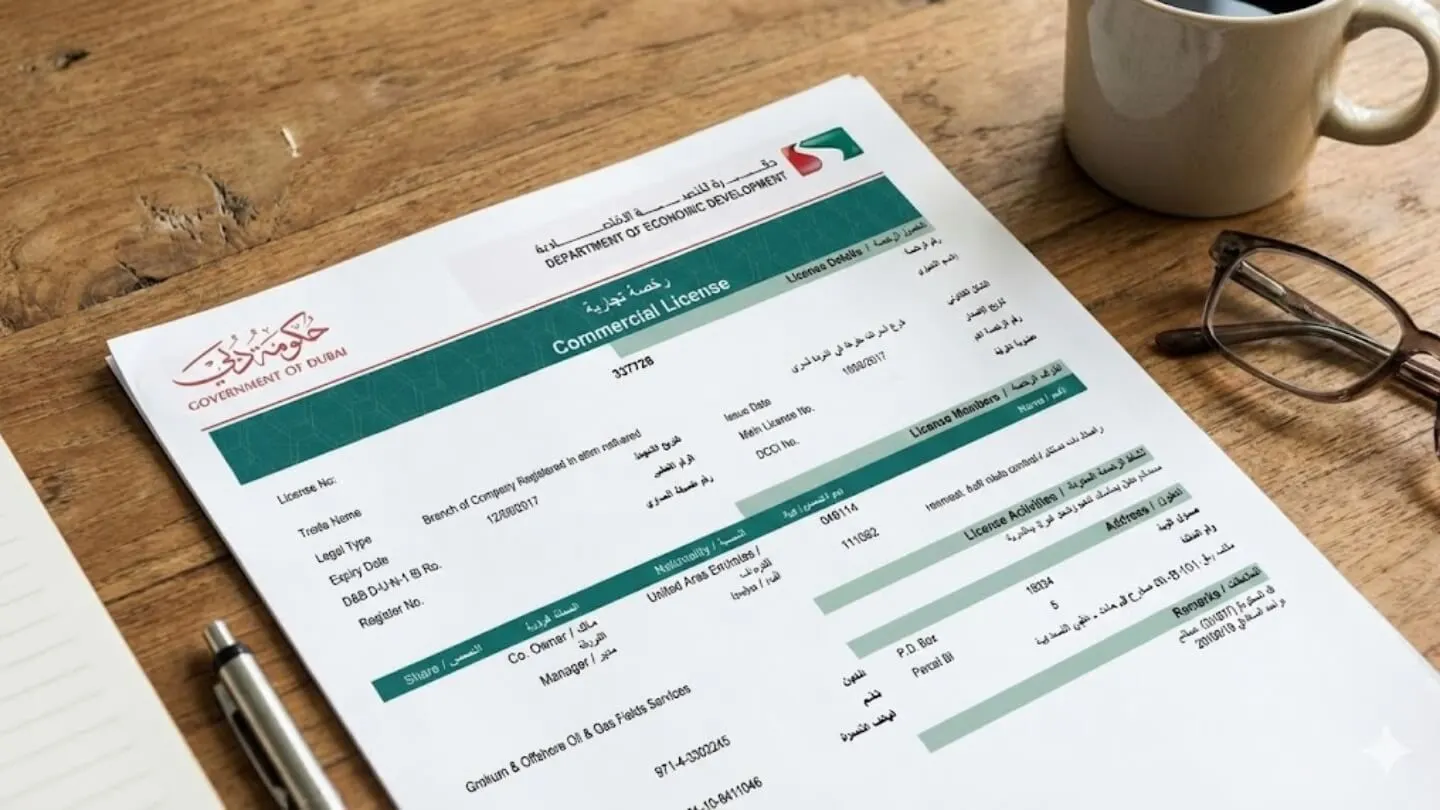
Do not confuse this document with a standard business licence. The «freelance permit» is a document issued by the authorisation to practise by name which links you directly to a specific activity, without creating a separate legal structure. It's you, and only you.
There is a major distinction: this status does not allow you to recruit employees or operate under a fancy business name. You invoice in your own name, which simplifies management but limits immediate expansion.
The different options for obtaining your licence
To obtain this grail, you must turn to the issuing authorities, mainly the Free Zones. Each zone offers its own rates and specific features, creating a kind of administrative competition that you can take advantage of.
The most popular option remains the GoFreelance programme, led by the Dubai Development Authority. It's the royal road for Tech and Media experts looking to set up in Dubai Internet City or Dubai Media City. It's straightforward and designed for solopreneurs.
Other Free Zones offer similar permits, sometimes cheaper, but often less prestigious or located further from the centre. The choice will depend on your budget and your need for credibility. See the official website for details: https://www.gofreelance.ae/.
Comparison of freelance licence solutions
Choosing the wrong structure from the outset can cost you dearly in modification costs later on. This table gives you an immediate overview of the technical and financial differences between the options, so that you can avoid unpleasant surprises.
| Features | GoFreelance permit (DDA) | Free Zone permits (e.g. DMCC) | Free Zone company (alternative) |
|---|---|---|---|
| Type of structure | Personal licence | Personal licence | Legal entity (company) |
| Main activities | Tech, Media, Education, Design | Varies by zone (often larger) | Wide range of activities |
| Estimated annual cost | From AED 7,500 | Variable (often AED 10,000 - 20,000) | From AED 12,000 |
| Opportunity to hire | No | No | Yes (depending on package) |
| Bank account | Personal account only | Personal account (sometimes difficult to set up) | Business bank account |
| Ideal for... | Pure freelancers just starting out | Freelancers with specific needs | The entrepreneur who wants to grow |
Le residence visa Your right to live and work in Dubai
With your permit in hand, there's just one thing you need to settle in: a residence visa. This is the document that authorises you to live legally in the Emirates.
Permit and visa: two very different things
Many people still confuse these two indispensable sesames. Clearly, the The freelance permit authorises you to work, while the residence visa authorises you to live. to WATER. Without it, your installation is legally impossible.
You can't cut corners here. A driving licence is the absolute prerequisite and then apply for residency. It is your permit that acts as your official «sponsor».
The step-by-step procedure for obtaining a visa
The administrative process follows an implacable logic. First you validate the freelance permit, then you apply for the Establishment Card. Next comes the Entry Permit, followed by the medical test and biometrics on site. Finally, the, the visa is stamped.
Don't plan too tightly. The whole process generally varies between 10 and 30 days. This speed will depend above all on the effectiveness of the Free Zone selected.
Once obtained, this visa remains valid for 1 or 2 years. It is renewable indefinitely as long as your freelance licence remains active with the authorities.
Documents to prepare for your application
La meticulous preparation is the key to a smooth administrative process. Having all the documents ready is essential.
Here is the exact list of required documents to avoid any immediate rejection of your application:
- Valid passport (valid for at least 6 months).
- Recent passport photo in passport format.
- Your newly obtained freelance licence.
- The establishment card (Establishment Card).
- A valid health insurance in the UAE.
- A university degree or proof of qualifications (portfolio, letters of recommendation).

Alternatives to the freelance licence: when should you set up your own company?
A freelance licence is an excellent way in, but it does have its limits. If you have bigger ambitions, you may need to look at other options, such as the setting up your own company.
The limits of traditional freelance status
This status includes major structural restrictions that could block your growth. You can't take on staff, you're limited to a single activity and opening a business bank account is often an obstacle course.
These barriers quickly become a problem if you set your sights high. Large groups and institutional clients often refuse to deal with individuals with no moral structure and require funds to be transferred to a dedicated corporate account.
The Free Zone company: the solution for growth
Switch to setting up a company in a Free Zone is the logical evolution for entrepreneurs who want to change scale. Unlike freelancing, you build a real business in which you own 100 % of the shares, without the need for a local sponsor.
This structure unlocks everything you've been missing: guaranteed access to a business bank account, invoicing under a separate business name and the legal ability to sponsor visas for your future employees.
It's a question of credibility and sustainability in the eyes of your partners. Opting for the Free Zone signals to the market that you are not just passing through, but that you are build a sustainable business.
Portage salarial: a little-known hybrid option
Freelance administration, via Employer of Record (EOR) structures, allows you to invoice via an established company while remaining independent. You use their legal structure to operate, so you don't have to set up your own entity straight away.
This method radically simplifies administrative management because there's no company to set up. You benefit from a local employment contract, which gives banks a great deal of peace of mind when it comes to obtaining loans and makes it easier for you to rent.
How do you choose? The importance of support
The choice between a freelance licence, a Free Zone company or freelance administration is not a toss-up. depends solely on your project. Each option has very different tax and operational implications depending on your ambitions.
This is where expert support to avoid costly mistakes. Specialists like Clemenceau Group will audit your situation in order to identify the legal structure that best serves your interests.
Budget and financial aspects: how much does a freelance adventure in Dubai really cost?
Choosing a structure is one thing, financing it is another. Let's talk about money: what are the Start-up costs for your freelance business in Dubai ?
The cost of the licence and visa
Freelance licence alone costs around AED 7,500 per year. That's a starting point, but the bill doesn't stop there. You need to add the visa fee and the cost of the establishment card.
Via GoFreelance, a two-year visa costs around AED 5,042, plus AED 2,000 for the settlement card. These amounts are needed to regularise your administrative situation.
In short, the total initial budget for the administrative setup is around AED 13,700 - 15,000. You should therefore expect to pay between EUR 3,400 and EUR 3,700 to get started.
Opening a bank account: an obstacle course?
With a simple freelance licence, opening a business bank account is very difficult. You'll soon be disillusioned by the rejections you receive. Most freelancers use their personal account by default.
This poses problems: lack of professionalism, difficulty in separating finances, and suspicion on the part of banks when faced with major movements on a personal account. You risk being blocked.
Digital banks such as Wio Bank are one option, but the most robust solution is to set up a company to access the Best pro banking options in the Emirates.
Don't forget the cost of living
Don't forget that structure costs are only part of the equation. Housing, transport and food account for the bulk of monthly expenditure. Your rent will be much higher than your licence.
You need to budget your installation carefully. Seriously evaluate the cost of living in Dubai to avoid unpleasant surprises and make sure you have enough funds for the first few months.
VAT and other tax considerations
Let's clarify the VAT situation. VAT of 5% applies in the UAE on most goods and services. A freelancer must register for VAT if your income exceeds AED 375,000 per year.
Even platforms such as Upwork apply this VAT. You must therefore’anticipate your billing and accounting needs. Check details of VAT in the UAE for freelancers.

Day-to-day freelance life in Dubai
The papers are signed and the bank account is (more or less) open. What does it look like? life as a freelancer in Dubai once you've settled in ?
Finding customers and developing your network
Dubai operates on a simple principle: your address book is your capital. Forget cold calling from behind a screen, here everything happens in person. Professional events, meetups and conferences are a must if you want to find local customers.
Of course, LinkedIn remains a useful tool for initial prospecting. But trust, that priceless currency in the Emirates, can only be acquired over a coffee or at a sector dinner. You need to shake hands to lock in lasting deals.
Coworking spaces: more than just an office
Working from your living room in your pyjamas has its limits, especially for your mental health. Visit shared spaces provide that essential break between private life and professional imperatives. They break the isolation inherent in self-employed status. It's a question of personal discipline.
More than just offices, these places act as real business accelerators. The best coworking spaces in Dubai organise targeted events that facilitate synergies between members. This is often where the most profitable collaborations.
Managing administration: renewals and compliance
Peace of mind comes at a price and has a specific deadline. Your permit and visa must be renewed every year or every two years, depending on your free zone. Anticipate these administrative procedures in order to avoid brutal financial penalties.
Never neglect the traceability of your financial transactions. Keep meticulous records of all invoices issued and the corresponding proofs of payment. The local authorities are stepping up their compliance checks, and amateur accounting is not an option.
Outlook 2026: what's in store for freelancers in Dubai?
You now have a clear picture of the current situation. But Dubai is changing fast. Let's look ahead to 2026: what changes to expect ?
A constantly evolving regulatory framework
Don't expect the rules to remain fixed indefinitely. The example of the temporary suspension of the issue of new visas in 2025 proves that the government adjusts its policies without notice. It's a stark reminder that flexibility is mandatory here.
These adjustments are not insignificant; they aim to professionalise the ecosystem and combat abuse. The aim is to’eliminate false profiles to keep only the real talent.
Tighter compliance controls
Let's be clear, the era of the «easy visa» is well and truly over. In 2026, the authorities will be checking applicants' files more carefully. You won't be able to make do with administrative approximations to get your pass.
Inspectors will focus on the reality of projects and the consistency of declared income. The threshold of AED 360,000 over 2 years could be more strictly applied to exclude those who do not generate sufficient value.
My advice is simple: keep tangible evidence of your activity to avoid any problems. Systematically archive your contracts, invoices and e-mail exchanges with customers as if they were your life insurance.
The impact of Corporate Tax on the ecosystem
Let's get straight to corporate tax. I should point out that it does not directly affect the personal income of freelancers, which remains taxed at 0%. Your money is yours, and it's a benefit that remains intact.
However, its introduction shows a clear trend towards tax structuring of the emirate. This reinforces the importance of having a clear status and making a clear distinction between personal income and business income for those who have a company.
Dubai establishes itself as the hub of choice for freelancers in 2026, offering zero tax and a dynamic environment. While the opportunities are real, the administrative rigour will be the key to your long-term success. Prepare your project carefully: the Emirati adventure is an unforgettable experience. powerful leverage for your international career.
FAQ Freelance in Dubai
What is the average salary of a freelancer in Dubai?
Income varies considerably according to expertise, but the average is often between AED 12,000 and AED 25,000 per month (approximately €3,000 to €6,300). Technical profiles, such as developers or cybersecurity experts, can easily exceed AED 30,000 per month.
The major advantage is that this amount is net in your pocket: there is no personal income tax in Dubai, which means that you will not have to pay any personal income tax. automatically increases your purchasing power compared with France.
How do I obtain a freelance permit in Dubai?
The procedure is now very clear. You must first apply for a freelance licence from a Free Zone (such as the Dubai Development Authority's GoFreelance portal). Once you have obtained this permit, you apply for your Establishment Card.
These documents will then enable you to sponsor your own residence visa. The whole process generally takes between 10 and 30 days and does not require a local employment contract.
What are the most popular professions for freelance recruitment?
Dubai is actively seeking skills in the knowledge economy. Technology sectors (developers, AI experts, data scientists) top the list, closely followed by digital marketing and content creation.
The business consultancy and specialised training sector is also a major growth area. very buoyant, Local companies are often looking for external experts for one-off, high added-value assignments.
What is the most profitable business to launch in Dubai?
The specialised B2B service activities are often the most profitable because they require little material investment. Strategy consulting, cybersecurity expertise or marketing for luxury real estate offer very comfortable margins.
The key to profitability in Dubai is niche: the more specialised your expertise (for example, «blockchain expert for finance»), the higher the daily rates you can charge.
How can I work in Dubai as a French national?
The French benefit from a simplified procedure. You do not need to find a local sponsor (a «kefil»). You can simply obtain your own freelance visa which gives you the right to live and work legally in the Emirates.
This status allows you to bill customers anywhere in the world, This is subject to compliance with the rules on effective residence (generally spending more than 183 days in the UAE).
How much does a freelance visa for Dubai cost?
Le total cost for the first year is generally between AED 13,500 and AED 15,000 (approximately €3,400 to €3,800). This includes the annual freelance permit (around AED 7,500), the settlement card and the residence visa fee for 2 years.
You need to budget for the annual renewal of your freelance licence. This is an initial investment, but one that is often quick payback thanks to no tax on income.
What legal status should you choose?
If you want to start out on your own, the «Freelance licence» is the simplest and least expensive option. It allows you to work in your own name. However, it does have its limitations, including difficulty opening a business bank account.
If you are planning to take on new staff or if you need a more robust structure to reassure large customers, it is preferable to set up a company in a Free Zone (FZE), although it is more expensive at the outset.